Lessons learned from operationalizing the Sierra Leone Child Survival Action Plan at national and subnational levels

Sierra Leone has shown impressive commitment and progress in accelerating maternal, newborn, and child mortality reductions. The country, in 2023, launched its National Child Survival Action Plan (2023-2025) which, under the broader RMNCAH strategy and existing priorities for maternal and newborn survival, laid out priority actions, milestones and targets to address the key causes of under-five mortality through an integrated primary health care approach.
 

Upcoming Events

Currently there are no upcoming events scheduled.

Past Events

- | Online

Engaging the Private Sector in High Quality Neonatal and Child Health Care

The Private Sector Engagement subgroup hosted a webinar to share key lessons from the Nepal experience engaging the private sector, quality interventions that go beyond training, and practical steps for implementers and governments. The presentation shared four pillars for effective private sector engagement including 1. Improving the enabling environment, 2. Improving knowledge and clinical capacity, 3. Continuously strengthening practices, and 4.

- | Online

Lifelong Care for Children with Chronic Conditions: A discussion series

This discussion series, focused on care for children with non-communicable diseases (NCDs), is hosted by the Re-imagining the Package of Care for Children subgroup of the Task Force in collaboration with UNICEF, Program Division - Health, Child and Community Health Unit. Health systems in low-and-middle income countries (LMICs) are experiencing an increasing burden of chronic conditions in children, including NCDs such as heart disease and diabetes.

- | Online

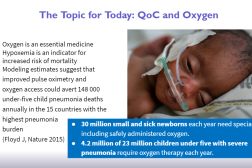
Hypoxemia in primary health care settings and implications for oxygen services: Evidence from Bangladesh, Malawi, Nigeria, and Uganda

The Quality of Care subgroup hosted panel discussion to review preliminary evidence of hypoxemia and outcomes among children in primary health care settings and discuss implications for oxygen services. The presenters, from the Clinton Health Access Initiative, Karolinska Institutet, and Johns Hopkins University, spoke to hypoxemia prevalence in Bangladesh, Malawi, Nigeria and Uganda.

- | Online

Action for the Newborn: Global and Country Priorities and Implementation

The Child Health Task Force hosted a webinar to present an overview of global newborn priorities as articulated in the Every Newborn Action Plan Results Framework and highlight three country experiences from India, Ethiopia and Bangladesh. A global newborn action plan developed by a dynamic group of global and country champions was endorsed at the World Health Assembly in 2014. This initiative catalyzed the development of over 50 national action plans in three years.

- | Online

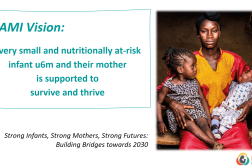
Caring for Small & Nutritionally At-Risk Infants and their Mothers: MAMI Care Pathway experiences from Ethiopia & Colombia

The Nutrition subgroup hosted a webinar to share the Management of small & nutritionally At-risk Infants under six months & their Mothers (MAMI) approach. Participants learned about the MAMI Care Pathway Package which facilitates screening, assessment and management and heard implementation experiences from Ethiopia and Colombia.

- | Online

Improving Access to MNCH Products through Strengthening Registration

The Commodities subgroup hosted a webinar to hear from USAID Medicines, Technologies, and Pharmaceutical Services (MTaPS) program about the challenges with registration of maternal, newborn, and child health (MNCH) medical products revealed in a nine-country study.

- | Online

Quality of Care for IMCI in Private and Public Health Facilities Webinar

The Private Sector Engagement (PSE) and Quality of Care (QoC) subgroups co-hosted a webinar to share results from a SHOPS Plus analysis of Service Provision Assessment (SPA) survey data from seven countries. The analysis examined how well health facilities in those countries adhere to integrated management for childhood illness (IMCI) guidelines for children 2-59 months and young infants under two months.

- | Online

Webinar on the WHO Child Health Redesign: A New Agenda for Child and Adolescent Health and Wellbeing

Hosted by the Child Health Task Force in collaboration with WHO and UNICEF colleagues, this webinar featured an update on the WHO Child Heath Redesign. The first presentation by Wilson Were focused on the overall framework for the redesign including strategic shifts in child and adolescent programming, the importance of a life-course approach, and examples of intersectional collaborations.